Global wind power hits record 169GW as China leads growth
India becomes second-largest wind market outside China.
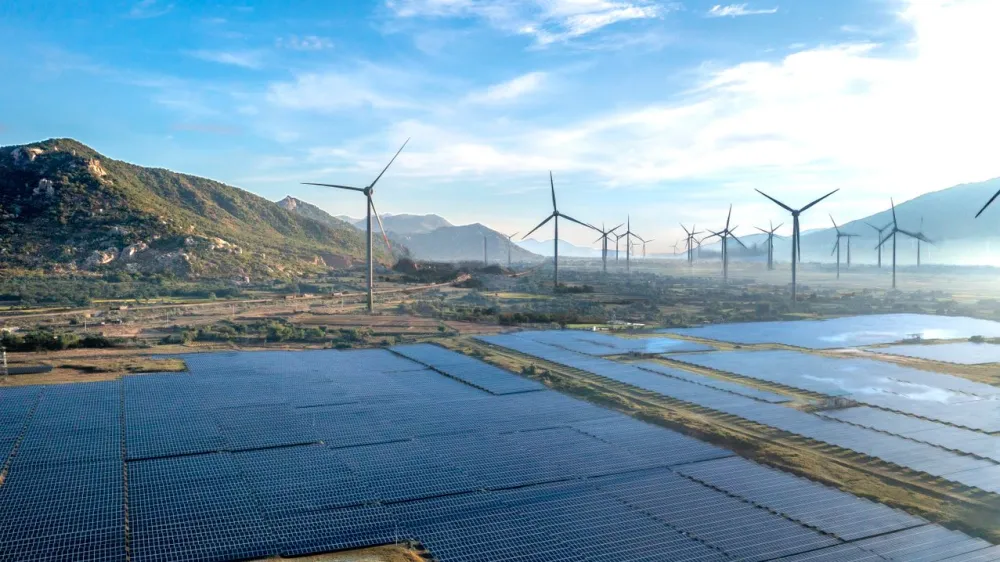
Global wind power installations reached a record high in 2025, marking the third consecutive year of new capacity records, according to BloombergNEF’s Global Wind Turbine Market Shares 2025 report.
Developers installed 169 gigawatts (GW) of wind turbines worldwide last year, a 38% increase from 2024. Most of the new capacity came from onshore wind, which accounted for 161GW or 95% of total installations, while offshore wind contributed 8GW.
China drove most of the growth, becoming the first country to install more than 100GW of wind capacity in a single year. Chinese turbine manufacturers also dominated the global supplier rankings, taking the top six spots.
Goldwind remained the world’s leading wind turbine supplier, installing 29.3GW in 2025. Envision held second place with 20.9GW, with nearly a quarter of its installations located outside mainland China. Mingyang and Windey followed in third and fourth place, while Sany and Dongfang Electric completed the top six with approximately 13.5GW each.
Cristian Dinca, wind associate at BloombergNEF and lead author of the report, said stable long-term policy support has helped concentrate wind installations in mainland China over the past decade.
“Chinese manufacturers consistently top the global rankings,” he said. “They benefitted particularly in 2025, as companies and provinces rushed to commission projects ahead of power market reforms and to meet targets set out in the Five-Year-Plan.”
Although Chinese manufacturers still relied heavily on domestic demand, 93% of their installed capacity in 2025 came from China, down from 99% in 2024—an indication that overseas expansion is beginning to accelerate.
Envision and Goldwind led in non-domestic installations.
Oliver Metcalfe, head of wind research at BloombergNEF, said Chinese turbine makers are increasingly establishing themselves in international markets.
“This moment marks the emergence of Chinese manufacturers as true global players, as their commissioned capacity abroad has increased eightfold over the last year,” Metcalfe said.
“Challenged by razor-thin margins at home, Chinese suppliers are leveraging lower-cost production and fast delivery to enter new markets and undercut established rivals across Latin America, the Middle East, Africa and Asia,” he added.
Wind installations outside mainland China also grew in 2025, rising 17% year-on-year to 43GW.
For the first time since wind power became a major global industry, India surpassed the United States and Germany to become the largest wind market outside China.
India’s growth has been supported by complex renewable energy auctions introduced in 2018, which often require developers to combine multiple renewable technologies or oversize wind projects beyond their contracted capacity.
Siddharth Shetty, BNEF’s lead wind analyst for India, said the country’s wind sector continues to gain momentum.
“India fully deserves its place as the second-largest wind market in the world,” he said. “The sector is reaping the rewards of complex auctions, pioneered by India’s clean power auctioning agencies in 2018.”
Danish manufacturer Vestas remained the largest turbine supplier outside mainland China, although it dropped to seventh place globally—its first time outside the top five since BNEF began publishing the rankings in 2013. The company installed projects in 28 markets, the most geographically diverse portfolio among turbine manufacturers.
Meanwhile, Siemens Energy’s wind division led the offshore wind market for the second consecutive year, narrowly ahead of Goldwind.
After three years of growth, however, offshore wind installations declined by about one-third in 2025, reaching only 8.1GW. The slowdown was driven by project delays in key markets such as mainland China and France, as well as political challenges in the United States that temporarily halted new activity.
BloombergNEF expects offshore wind installations to rebound in 2026, as delayed projects are completed and a new wave of large-scale developments in the North Sea begins commissioning.













 Read Here
 Advertise
 Sign Up