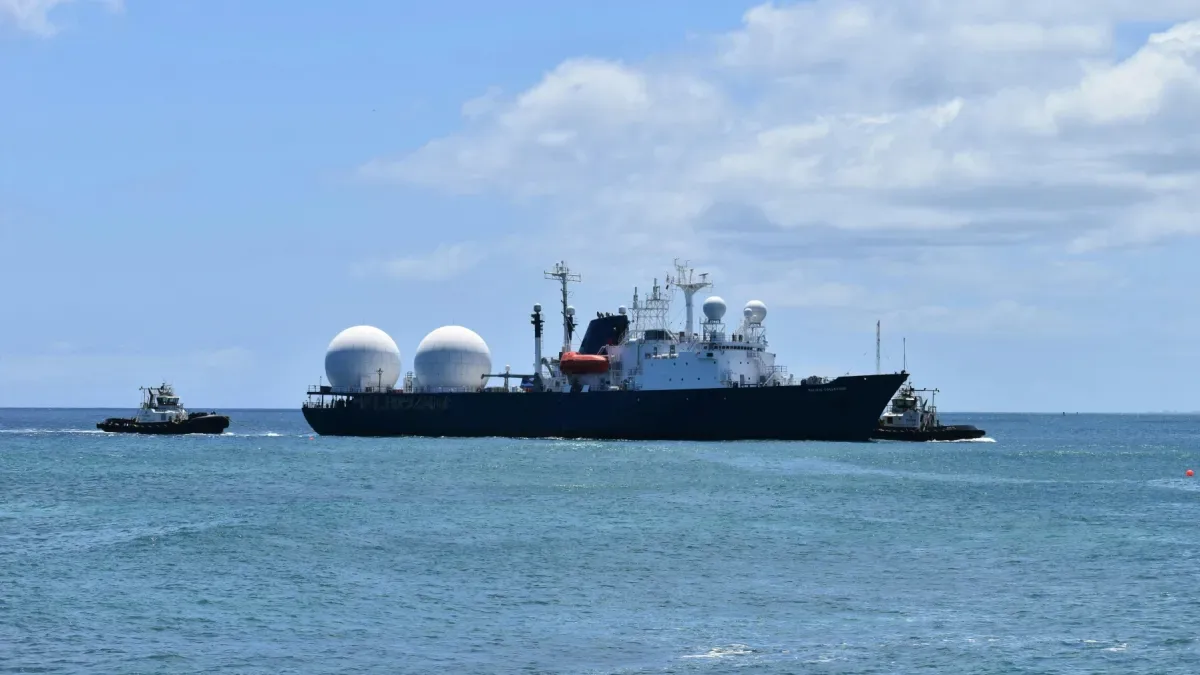
Pakistan faces LNG challenges amidst Middle East conflict
Iran’s closure of the Strait of Hormuz threatens LNG supply to Pakistan, India, and Bangladesh.
Rising tensions from the US-Israel war with Iran are disrupting global energy markets, driving up oil and gas prices and threatening LNG supply to South Asia, according to a report by the Institute for Energy Economics and Financial Analysis (IEEFA).
The report said that Iran’s closure of the Strait of Hormuz, a key LNG route, puts Pakistan, India, and Bangladesh at risk of shortages.
Pakistan relies on Qatar and the UAE for 99% of its LNG imports. In response to the crisis, the government has prioritised domestic supply, suspended 78 mmcfd of LNG to the fertiliser sector, and reduced regasification at two terminals to 100 mmcfd from 500 mmcfd.
Despite these precautions, Pakistan entered 2026 with a LNG surplus, with plant utilisation below minimum dispatch levels.
The report noted that the country could withstand short-term disruptions if the Middle East crisis is contained within a few weeks.
High levels of distributed solar generation and declining grid consumption provide an additional buffer against potential power-sector demand shocks.
Pakistan’s LNG surplus emerged from declining domestic demand, rapid growth in solar power, and uncompetitive LNG prices linked to rigid long-term contracts. LNG imports had rebounded in fiscal year (FY) 2024 to 7.85 million tonnes — a 13% increase from 2023 — but weak demand and high costs led to a system surplus by the last quarter of 2024.
The power sector accounts for nearly 70% of LNG consumption, but high prices have pushed LNG plants down the merit order. In 2025, LNG consumption declined by 1.21 million tonnes, equivalent to 4.5 terawatt-hours (TWh) of reduced power generation, with industrial consumption also dropping sharply.
State-owned LNG plants, Bhikki, Balloki, Haveli Bahadur Shah, and Trimmu, faced underutilisation, with Trimmu averaging just 16% for the year. Smaller thermal plants saw utilisation rates drop to as low as 0–4%.
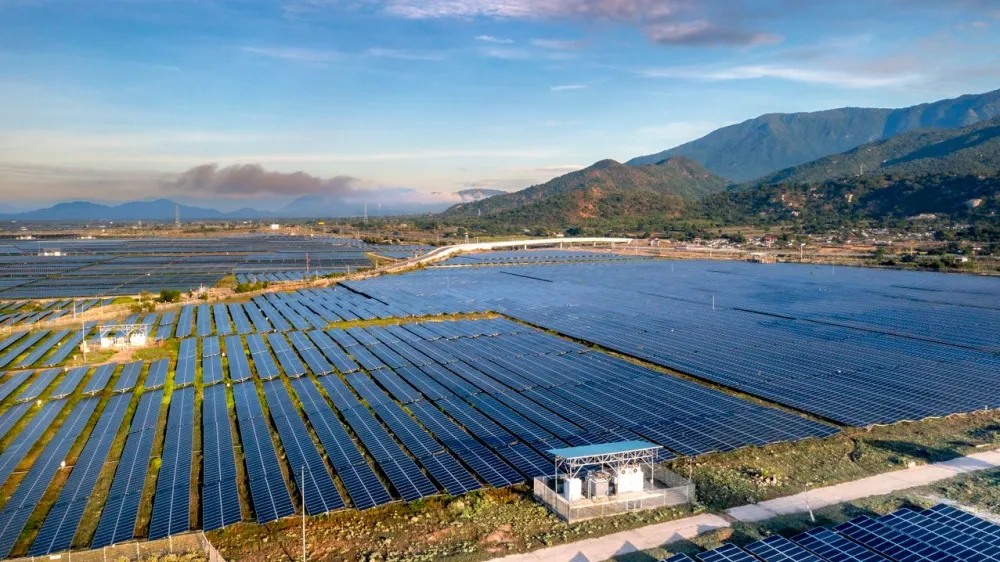
Meanwhile, distributed solar capacity surged to 34 gigawatts (GW) in 2025, reducing grid-based demand by nearly 11% compared to FY2022 and easing reliance on LNG-based power generation.
Long-term contracts with Qatar and ENI, lacking flexibility, forced the government to resell 24 Qatar-contracted and 11 ENI-contracted cargoes on a Net Proceeds Differential basis, with more potentially diverted if demand remains weak. Diverting LNG to domestic users is costly, adding to Pakistan’s $11b (PKR3.3t) circular debt.
Pakistan’s scheduled LNG price review with Qatar in March 2026 could provide an opportunity to renegotiate pricing terms.
Current contracts carry a 13.37% Brent slope, higher than that of neighboring countries, suggesting potential for downward revision.
IEEFA noted that flexible contract terms, including destination and volume flexibility, may be critical as global LNG markets shift toward surplus conditions once Middle East supply disruptions are resolved.
“The US-Israel war with Iran has heightened military tensions and resulted in strikes on energy infrastructure across the Gulf region and disruption to traffic through the Strait of Hormuz,” the report said, Qatar halted production and declared force majeure after its Ras Laffan liquefaction facility was also struck.”
It added that rising wholesale energy prices may increase Pakistan’s landed LNG costs, whilst price review negotiations could face delays.
Pakistan is also exploring alternative oil supply routes and boosting domestic production to mitigate reliance on imported LNG.
Renegotiating contracts to offload excess LNG may provide temporary relief, but it does not fix the underlying problem, an energy procurement strategy misaligned with evolving demand and rapid growth in renewable energy.
The report said that expanding solar power and lowering grid consumption can reduce reliance on global LNG, especially amid Middle East tensions.
Pakistan should accelerate solar development, reduce contracted LNG volumes relative to demand, and move from reactive crisis management to a proactive energy strategy. This includes agile procurement, advanced demand forecasting, distributed generation, and stronger institutional capacity to secure flexible supply terms.














 Read Here
 Advertise
 Sign Up