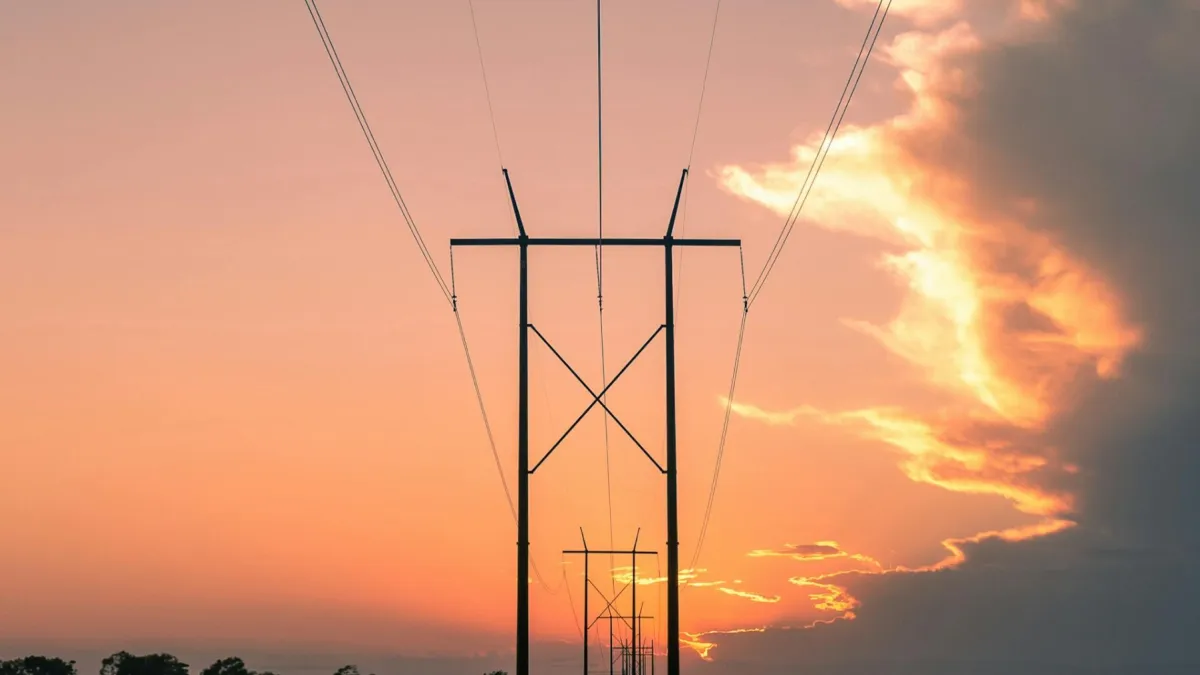
China pulls ahead in power capacity as US AI expansion faces grid constraints
China has increased electricity generation by nearly 9% annually over the past 25 years.
China’s rapidly expanding electricity generation capacity is emerging as a potential advantage in the global race for artificial intelligence, whilst the United States struggles to scale power supply fast enough to meet rising demand from data centers, according to RBC Wealth Management’s has latest Global Insight Special Report.
U.S. electricity consumption is climbing again after more than a decade of stagnation, driven largely by AI infrastructure. But new generation and grid capacity are not keeping up.
China, by contrast, has increased electricity generation by nearly 9% annually over the past 25 years and has added more capacity since 2021 than the U.S. has over its entire history.
The expansion has been driven by heavy state investment, faster approvals, and a broad energy strategy combining renewables and fossil fuels.
BloombergNEF expects China to add nearly six times more new capacity than the U.S. over the next five years.
In the U.S., grid constraints are becoming a major bottleneck. More than 10,000 power projects—totaling about 1,400 GW of generation and 890 GW of storage—were waiting for interconnection at the end of 2024, according to Lawrence Berkeley National Laboratory.
However, historically only about 13% of projects in interconnection queues reach operation, with most withdrawn or stalled. Power plant development timelines have also doubled to more than four years, while transmission projects can take up to a decade.
Despite these constraints, U.S. hyperscalers continue to increase AI spending. Consensus estimates put 2026 capital expenditures by Amazon, Alphabet, Meta, Microsoft, and Oracle at over $675 billion, up more than 60% year over year.
However, analysts warn that power shortages could limit data center expansion and delay monetization of AI investments. If capacity cannot be delivered on time, earnings growth assumptions and valuations could face downside risk.
“This issue is well known and should be reflected to some extent in current share prices and earnings expectations, but there could be room for disappointment and re-pricing if markets are too optimistic about the potential for new capacity to resolve power bottlenecks,” it noted.
















 Read Here
 Advertise
 Sign Up