Japan

Japan's Chubu Electric seeks power saving in winter

Japan's Chubu Electric seeks power saving in winter

Chubu Electric Power would join other utilities in Japan in asking its customers to keep saving power this winter due to lack of enough surplus to meet peak-hour demand.

Japan's nuclear power plant usage rate fell to 20.6% in September

The average run rate was 66.7% a year ago, according to Reuters.

Nuclear seaps back into favour as Japan begins energy

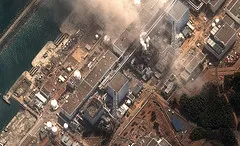
Former Japanese prime minister Naoto Kan concluded in March that nuclear power was no longer worth the risk after the world's worst nuclear accident in 25 years. His successor seems less convinced. Prime Minister Yoshihiko Noda's month-old government let a panel of experts begin debate on Japan's energy policy on Monday, but Noda has already signaled that nuclear power could play a role for decades. Six months after an earthquake and tsunami crippled the Fukushima plant, which is still leaking radiation, critics say powerful pro-nuclear interests are quietly fighting back. "It's been a real bad year for the 'nuclear village' but I don't think they are down and out," said Jeffrey Kingston, Director of Asian Studies at Temple University's Japan campus, referring to the utilities, lawmakers and regulators who long promoted atomic power as safe, clean and cheap. Public concern about safety leapt after the Fukushima accident, which forced 80,000 people from their homes and sparked fears about food and water supply. Some 70 percent of voters polled in July backed Kan's call to phase out nuclear plants. A series of scandals in which regulators and power companies tried to sway hearings on reactors has also dented public trust. Noda has acknowledged that public safety concerns will make it tough to build new reactors, but on Friday stopped short of saying atomic power would play no role at all by 2050. He said decisions on reactors already under construction would have to be made "case-by-case." The panel is led by the chairman of steel industry giant Nippon Steel Corp, a heavy user of electricity and considered partial to nuclear power, but also includes those opposed to atomic energy. Public safety fears remain high. Tens of thousands rallied in Tokyo last month urging an end to nuclear power, a hefty showing in a country where taking to the streets is rare. Their concerns include how to deal with increasing nuclear waste, such as the Fukushima reactors. Japan, the world's third-biggest nuclear generator, has postponed a decision on where to build a nuclear waste repository. The operator of the crippled reactors, Tokyo Electric Power Co, faces a huge compensation bill, estimated at 4.5 trillion yen ($58 billion) for the two years through March 2013 alone, and will need funds from a government-backed scheme to stay solvent. The government, analysts say, has made clear it views Tokyo Electric as too big to fail. "That rickety scheme, though it is not explicit, would see the monopoly maintained and nuclear plants continue to be used," said Andrew DeWit, a Rikkyo University professor who writes about energy policy. Yet Trade Minister Yukio Edano, who was chief cabinet secretary for former leader Kan and now oversees energy policy, said on Monday the panel should take into account a change in public views for atomic power. "The debate should not start from the current status but rather show what the country should be in the future, then discuss how it can quickly approach there," he told the panel. Reuters.

Pro-nuclear groups in Japan fight back

Prime Minister Yoshihiko Noda's month-old government begins debate on Japan's energy policy, but Noda has already signalled that nuclear power could play a role for decades. Six months after the world's worst radiation crisis in 25 years erupted at the tsunami-crippled Fukushima plant, critics say powerful pro-nuclear interests are quietly fighting back. "It's been a real bad year for the 'nuclear village' but I don't think they are down and out," said Jeffrey Kingston, Director of Asian Studies at Temple University's Japan campus, referring to the nexus of utilities, lawmakers and regulators who long promoted atomic power as safe, clean and cheap. Public concern about safety leapt after the Fukushima accident, which forced 80,000 people from their homes and sparked fears about food and water supplies. Some 70 percent of voters polled in July backed Nato Kan's call to phase out nuclear plants. A series of scandals in which regulators and power companies tried to sway hearings on reactors has also dented public trust. In an effort to tap in to that sentiment, Kan floated ambitious targets for renewable energy and embraced a future without nuclear power. He promised an overhaul of a government plan approved last year to build 14 new reactors and raise the share of nuclear power in Japan's electricity mix to 53 percent by 2030 from about a third prior to the Fukushima accident. "It chilled me to the bone every waking moment of each day," he told his last news conference as premier of the battle to contain the disaster. "How should we deal with the risk that nuclear power might cause our country to perish? This question is what led me to propose the creation of a society free from dependence on nuclear power." Noda, in contrast, has acknowledged that public safety concerns will make it tough to build new reactors, but on Friday stopped short of saying atomic power would play no role at all by 2050. He said decisions on reactors already under construction would have to be made "case-by-case". He was also vague about the criteria that an advisory panel, which will make recommendations on a new energy plan by next summer, should use in reaching its conclusions. "Naturally, we are aiming at the best energy mix that can allay the concerns of the citizens about safety," Noda told a news conference.

TEPCO expects top meet winter demand with % leeway

Tokyo Electric Power Co expects to be able to supply 53,000 megawatts of power this winter, around 6 percent of a meet projected peak demand of about 50,000 MW., reports Reuters.

GE Hitachi calls for shut-down tests on reactors

E Hitachi told nuclear operators to conduct tests to determine what conditions would prevent the reactors from shutting safely during an earth quake.

Tohoku Electric to triple wind capacity by 2020

Tohoku Electric Power Co aims to accept more than triple the capacity of wind power to its grid at 2 gigawatts by 2020.

Tokyo Electric to prioritize use of coal

Tokyo Electric will prioritize thermal coal due to its relative cheapness, followed by liquefied natural gas and fuel oil. "We're trying to cut procurement costs," said Takashi Fujimoto, Tepco vice president.

Tepco eyes cold shutdown for Fukushima nuclear plant this year

The Japanese government and Tepco said that they are now aiming to bring the Fukushima Daiichi plant to a cold shutdown within this year, instead of by January as initially planned.

GE and Toshiba to bring FlexEfficiency power plant technology to Japan

The companies will mutually promote new combined-cycle power plants for projects in Japan, and other Asian countries as well.

Japan to lift restrictions on Fukushima Evacuation Zone

“I plan to take measures to lift the Emergency Evacuation Preparation Zone this week if possible,” said Goshi Hosono, the minister in charge of responding to the nuclear crisis.

Japan’s new energy policy to take effect by early 2013

To make up for the decline in nuclear power generation, the country will boost power conservation and the use of renewable energy in its new electricity portfolio.

Japanese power companies work towards CO2 goal

The sector’s CO2 emissions were cut to 317 million tons, largely meeting protocol targets.

TEPCO to shut down reactors at Fukushina nuclear plant by 2012

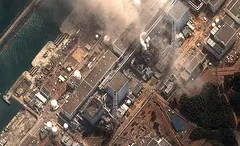
Tokyo Electric Power (TEPCO) has set a target to ensure the safe shutdown of nuclear reactors at the Fukushima Daiichi nuclear plant in Japan by January 2012. Japan's economy, trade and industry minister Yukio Edano announced that it would be possible to safely shut down the three damaged nuclear reactors at the quake-hit plant. TEPCO plans to bring the tsunami-battered nuclear reactors to a temperature of around 100°C by January, under a nine-month road map stabilisation plan. The UN's atomic agency said the plant's nuclear reactors were stable and the shutdown could be achieved ahead of schedule.  

Fuksuhima Dai-Ni plant may be decommissioned

Tokyo Electric Power may decommission the Fukushima Dai-Ni nuclear power plan, Japan's industry minister Yukio Edano said.

IAEA sees China and India leading nuclear energy growth

The U.N. atomic agency still expects significant growth in the global use of nuclear power over the next two decades after  Japan's Fukushima accident.

Japan reactors to restart when safety assured: trade minister

Japan's nuclear reactors will be restarted once safety is confirmed and local communities give their approval, according to the country's new trade minister Yukio Edano.