China’s renewable buildout falls short as fossil fuel exposure persists, report says
Coal still accounts for more than half of the country’s total energy consumption.
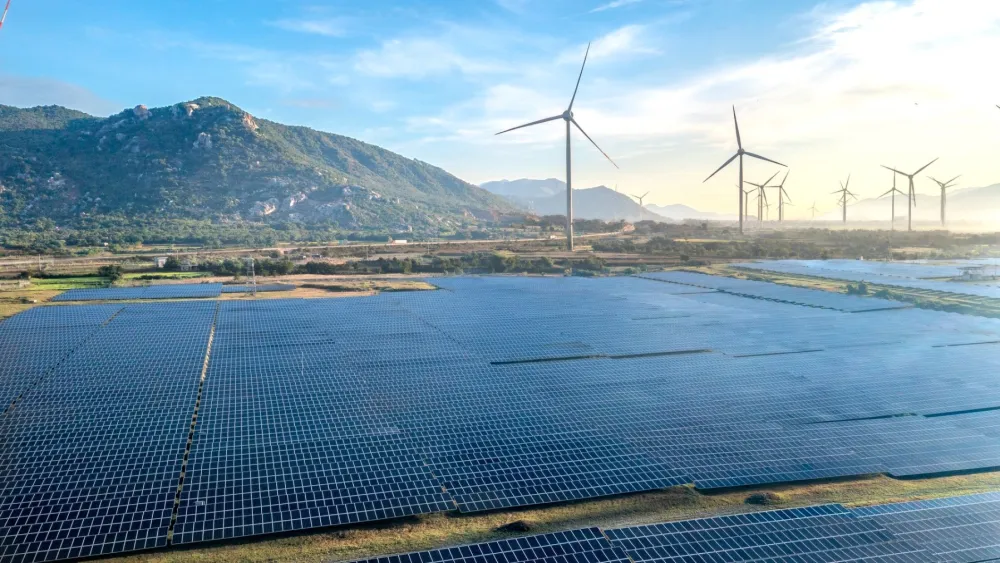
China's rapid expansion of renewables has provided a measurable buffer against oil price shocks, but the country's continued dependence on coal means its clean energy shield remains incomplete.
According to a Greenpeace report, with more than 30 million electric vehicles displacing an estimated 430,000 barrels of gasoline daily, China has absorbed much of the secondary energy market turbulence that has hit fossil fuel-dependent economies.
However, coal still accounts for more than half of the country’s total energy consumption, with wind and solar contributing only 10% of consumption despite representing 22% of total electricity generation capacity.
Since 2022, calls for energy security in China have run in parallel with accelerated coal power plant construction—a pattern Greenpeace argues undermines the very resilience Beijing seeks to build.
The organisation contends that dependence on any fossil fuel, whether imported oil or domestic coal, introduces systemic price and geopolitical risk that renewables do not carry.
Despite the coal overhang, China's coal power emissions peaked that year, and for the first time, combined wind and solar generation was sufficient to meet 100% of the country's incremental power demand growth.
At current rates of renewable deployment and grid modernisation, China is projected to generate 33% of electricity from renewables by 2028, rising to 40% of total electricity by 2030.
New planning documents are also directing investment into grid-scale energy storage and smart grid infrastructure.


















 Read Here
 Advertise
 Sign Up