Staff Reporter

Major Philippine bank transitioning to solar power

Major Philippine bank transitioning to solar power

This US$3.7 million project will be completed in three years. Bank of the Philippine Islands will enter into a build-operate-transfer agreement for the installation of solar panels at 400 of its branches nationwide. It will partner with Solarus Partners for the solar project, the first of its kind by a Philippine bank. Its branches at Ayala Avenue in Makati City and the town of Cainta in Metro Manila have been equipped with 5 KW solar panels. BPI expects to have half its branches fitted with solar panels that can produce 20 KW of power or 40% of its monthly electricity consumption.

Philippines upgrading transmission system on Luzon island

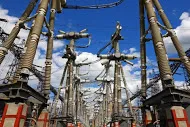
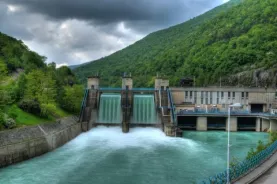
Five-year project will cost US$1.25 billion. The National Grid Corporation of the Philippines will start by improving the transmission facilities of the 75 MW Ambuklao hydroelectric dam built in 1950 and the 132 MW Binga hydroelectric dam built in 1956. NGCP said the transmission development plan plans to increase the amount of electricity distributed by the Luzon grid from 7,969 MW in 2011 to 11,165 MW in 2021. Metro Manila consumes 74% or 8,305 MW of the 11,165 MW of electricity channeled daily through the Luzon grid. The plan intends to modernize the high-power voltage lines of the Ambuklao and Binga dams and the transmission lines connecting Binga to San Manuel, Pangasinan, and to La Trinidad, Benguet.

Southeast Asia is energy industry’s next growth market

Region will be comparable to China and India. The International Energy Agency said people may be talking about Southeast Asia as the next emerging market for energy, just as people have been talking about China and India. has a combined population of about 600 million. Together, the 10-member Association of Southeast Asian Nations (ASEAN), China and India are really gradually shifting the center of gravity of the global energy market towards Asia, IEA said. ASEAN economies are expected to diversify their energy sources to include more clean energies with natural gas as an important option.

JAG Energy plans 13 GW solar farm in Japan

Plant will supply electricity to Tokyo. JAG Energy Company, Ltd said the new solar farm will be built in Kanagawa prefecture, south of Tokyo. JAG Energy is a unit of Japan Asia Group Ltd. JAG energy will start building the facility February 2014 and is expected to complete the project by March 2015. The facility will supply power to Tokyo Electric Power Company and will be equipped with Toshiba solar panels. JAG Energy is engaged in the development and operation of renewable energy plants and provides renewable energy consulting services.

South Korea might abandon nuclear power

Part of fallout from bogus safety certificates scandal. A government working group has recommended a cut in South Korea's reliance on nuclear power. It cited a fall in public confidence in nuclear plant safety triggered by Japan's Fukushima nuclear disaster of March 2011. The study recommended South Korea’s nuclear power capacity be kept between 22% and 29% of the total by 2035, well below existing plans to grow the sector to 41% in less than 20 years. In 2012, nuclear accounted for 26% of total generating capacity. The government will hold public hearings to decide whether to back the recommendation before finalizing its energy policy in December. Coal made up about 31% of power generation capacity in 2012 while LNG contributed 26%. Three of South Korea's 23 reactors are offline due to the fake safety certificates, while another will be shut on Oct. 30 to examine welding quality related to the safety of a steam generator. Two others are also offline for regular maintenance and a sixth one is shut, awaiting an extension of its 30-year life span. Of six reactors under construction, three have been delayed from start-up, also because of safety issues.

Coal to reign as dominant energy source by 2020

Will replace oil despite clean energy initiatives.

Japan plans orbiting solar energy stations

Energy will be “beamed down” to terrestrial stations.

Air Liquide Japan, Toyota Tsusho partner in hydrogen supply business

Will supply fuel cell electric vehicles in Japan. Both companies have formed a joint venture, Toyota Tsusho Air Liquide Hydrogen Energy Corporation, with headquarters in Nagoya. The JV will build two hydrogen refueling stations (HRS) in the Aichi area (Atsuta in Nagoya and Fukada in Toyota City) to supply hydrogen for future fuel cell electric vehicles.The HRS will be operational in 2014. Fuel cell vehicles are expected to reach the Japanese consumer market in 2015.Japan intends to build 100 HRS in and alongside highways connecting Tokyo, Nagoya, Osaka and Fukuoka by 2015.Air Liquide Group has developed technology across the entire hydrogen supply chain from production and storage to distribution and use by the end consumer. It has built 60 HRS for fuel cell vehicles around the world.Toyota Tsusho is a major affiliate of Toyota Group focusing on its energy-related business.

Itochu to market cheaper battery backup system for buildings

System uses Samsung SDI Company's  lithium ion batteries.

Chinese scientists develop revolutionary “smart window”

Window both reflects heat and generates electricity.

Malaysia reports surge in renewable energy projects

Ignited by implementation of Feed-in Tariff in 2011.

Mitsui pushes ahead with wave power technology

Partners with Ocean Power Technologies Inc.

Indonesia begins moves to amend Geothermal Law

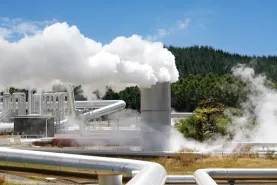
Revision to optimize the utilization of geothermal energy. The Ministry of Energy and Mineral Resources has filed a draft bill at the Indonesian parliament to revise Law No. 27 of 2003 on Geothermal Energy. Commission VII at the House of Representatives has formed a Special Committee to further discuss the draft bill. Jero Wacik, Minister of Energy and Mineral Resources, said that as a renewable energy source, geothermal energy has great potential to contribute to electricity distribution in Indonesia. Indonesia has up to 40% of the world’s potential geothermal energy resources capable of producing 30,000 MW of electricity annually. Despite its great potential, the development of geothermal energy is currently being held back by cross-ministry regulations. This is a consequence of geothermal energy production being considered a mining activity. This has caused problems for exploiting geothermal hotspots in forest areas that requires permits from the Ministry of Forestry and Ministry of Environmental Affairs.

India allows Chinese to set-up PESCs

Demand for Chinese power gear rising in India. India has allowed power equipment makers from China to set up power equipment service centers (PESCs) in India. India has become a strategic market for Chinese power equipment manufacturers.