Staff Reporter
Korea hikes electricity price by 4.5%
Korea hikes electricity price by 4.5%
South Korea's electricity price for industrial and educational sectors and office buildings will be raised by an average 4.5 percent.
Bangladesh power plants shut to give way to fertilizer plant
Gas rationing for Power Development Board in Chittagong was suspended in order to start operations of a fertilizer factory.
Thai Solar Energy to develop 135MW projects at US$447 M

Thai Solar Energy is planning to invest nearly US$447 million in the development of 135MW of solar projects using direct-steam generation.
The growth and development of natural gas in China
Whilst the growth of natural gas usage for industrial and power generation purposes is developing swiftly across Asia no country is investing as much money and effort into building their natural gas infrastructure as China is currently doing. Not only is the country developing long distance west to east gas pipelines to import the gas from neighboring countries it is also investing heavily into its exploring for domestic energy resources for the clean fuel which is already in big demand. In addition to these significant steps being taken to supply demand across the country there are now many Liquefied Natural Gas (LNG) receiving terminals coming online to receive large shipments of the cleaner fuel from overseas suppliers.
‘Low carbon future’ is here!

“The future ain’t what it used to be!” (seen on a bumper sticker) Climate change is the only constant The need to address the issue of climate change has become a matter of priority, and players in the shipping industry must stand up and be counted to play their part to reduce carbon emissions. Being a crucial facilitator of trade and at the forefront of activities such as offshore oil and gas exploration and production, shipping is omnipresent and hence commands international attention. Expectations are therefore high for the industry players and regulatory authorities to take urgent, meaningful action to introduce eco-friendly practices in shipping. One way or another, industry players must prepare themselves for a lower carbon future, and that future is looming in the horizon. Delaying actions - or worse, not taking any action – is simply not an option. There is growing pressure for transport operators, including in shipping, to take serious actions to mitigate the risks of climate change. Signs are all around that the world is under serious pressure from a scorned Mother Nature whose delicate balance has been upset by the ravages of climate change. Raging bushfire in Russia, fatal floods in Pakistan, tragic mudslides in China and the separation of a 60 sq km chunk of ice from a glacier in Greenland are just some reminders of the terrible impacts of climate change. The failure of the United Nations Conference of Parties on Climate Change (COP 15) held in Copenhagen in December 2009 to reach a consensus to advance the agenda is a wake-up call for industries, including the transport sector, to act quickly to reverse the adverse impacts of climate change on the environment. Pressure is growing for world leaders to come up with a concrete plan at the COP 16 meeting in Cancun, Mexico in late 2010 to reverse the ill effects of climate change. All eyes are on COP 17 in Durban, South Africa to make advances on this most important agenda. A December 2009 report published by Lloyd’s List stated that despite shipping contributing a mere 3.3% of the global total of carbon emissions from economic activities, emissions from shipping were estimated to have doubled since 1990. The report projected that this percentage would grow by a factor of two to three by 2050 from 2007 levels should no regulatory measures were put in place to lower the emissions from shipping. Pulling up shipping’s weight This should make industry players sit up and take note of the dire prospect, and not become complacent and ‘lulled’ by the fact that shipping contributed only a small percentage to the total global carbon emissions. Industries must rally behind the commitment of governments to reduce carbon emissions and contribute towards fulfilling that objective. The shipping industry especially must make the issue of reducing carbon footprint as a priority and must aim to put in place strategic measures to reduce or limit the volume of carbon emitted from their operations. While admirable efforts had been initiated and were being planned by the International Maritime Organisation (IMO) to lead the way in reducing carbon footprint in the shipping industry, many issues and challenges must be addressed and overcome for the shipping industry to cut down its carbon emissions in a systematic and meaningful way. What is urgently needed is for IMO to put in place a globally accepted regime to curb carbon emissions. A national or regional regime based on a piecemeal approach would not do, given the global nature of shipping. The intensity of opposition towards reduce carbon emissions in shipping could be seen in proposals such as applying the Common But Differentiated Responsibilities among maritime nations and introducing market-based instruments. Other issues include the lack of financial resources, the need to develop adequate and skilled manpower, overcoming technological challenges, high cost of compliance, lack of enforcement, and that challenge of balancing ‘going green’ with business imperatives. IMO’s Greenhouse Gas Study updated in 2009 reported that the application of ‘known technology and practices’ could make vessels more efficient between 25 to 75%, depending on the types of vessels. However, adapting such technology and practices may give rise to other issues. In the event that shipowners pass the costs incurred from ‘going green’ onto their customers, the latter will in turn pass their costs down to end users and consumers of the cargo they ship. Given the considerable costs involved in practicing ‘green shipping’, there may not be much of an incentive for shipowners to increase efficiency of their ships to a level that will make a difference on a global scale. Unless they can gain competitive advantage by ‘going green’, or at least can avoid competitive disadvantage, it is hard to imagine that shipowners are going to adopt a voluntary technological revolution to change the entire shipping industry to a greener one. What more at a time when many of them are reeling from the crushing impact of global recession, credit crunch and falling demand for shipping services. These issues and fears need to be exhaustively debated and addressed before a consensual approach to address climate change can be attained by shipping industry players. While it is encouraging to note the growing awareness among stakeholders in the sector of the need for them to reduce carbon outputs, there is also a need to anticipate the effects of adapting measures to mitigate the risk of climate change. This calls for nuanced measures and policy options leading to implementable, practical and effective solutions to reduce carbon emissions in the shipping sector, while meeting the need for smooth and efficient flow of trade along the maritime supply chain.
Biofuels revisted - does it matter?

When we think of biofuels, we shelve it away as being more related to transport fuel and also in the “been there, didn’t work” box. The surge of interest of a few years back has withered away in the glare of commercial feasibility metrics as well as even a reexamination of its inherent environmental/ethical compass. Nontheless, biofuels have not gone away and while carbon credits may expire next year and renewables has underwhelming in terms of scale of delivery, biofuels may be rising a deeper and more sustained long-term policy support driver in Asia. And this time, they may even actually work… In Asia and especially in north Asia where primary energy is almost entirely imported, the main locus between national economic growth and energy has been that singular dependency and vulnerability in terms of national energy security. The unspoken social compact is a pairing of economic growth for social stability. It’s not necessarily about being environmentally responsible or green global citizenship or whatnot. To ensure domestic social stability and economic growth, securing energy supply chains has in turn been the paramount energy policy goal. In terms of green energy, the primary policy driver is now shifting from a renewables-oriented one to a biofuels oriented one. Flash in the Pan? Even as little as 5 years ago, just a whisper in power generation timelines, biofuels went from burning cooking oil from fastfood grease in hippie cars to significant private equity, governmental and other investment bets, to the foghouse again. The entire cycle of imagination, interest and disregard took roughly 2-3 years. So what went wrong? In Asia, palm was seen as the major regional vector for biofuels. However, burning down rainforests and killing orangutans were not necessarily what green advocates had pictured green fuels to be and globally, the inevitable backlash meant that such “food or fuel” biomass (also known as first generation biofuels), ended up as a policy pariah. “Second generational biofuels” from non-food sources such as cellulosic biomass, jatropha, etc., then took up the biofuels baton but their yields have been disappointing and helped put biofuels in that mental “been there, didn’t work” box. Now we are in the phase of wonky-sounding “third generation biofuels” such as from bioalgae, cyanobacteria, and even recombinant bioalgae. Such bio-life forms tend to be simple single-cell organisms which since they don’t have to produce roots, leaves and other macro structures, convert almost half of their bodymass to fuel oils. For these, the basic science and technology have been proven, but commercial extraction and other technical points remain to be worked out so it’s not quite there yet either. Time to bring it back out of the box? So why should we take it out of that mental lockbox now? Thinking in terms of timelines, the green energy sector is an immature sector and its timeframes are much more compacted with volatility swings more vertiginous compared to the more stodgy slopes in the pure power generation sector. In the accelerated biofuels timeframe, the entirely cycle of the first to third generation debates have taken place in just half a decade. 10 years ago, algae biofuels were well over US$1000 a barrel when oil was less than US$20. Now with oil over US$100 (and with demand pressure not likely to let up as China and India keep growing), algae biofuels are now closer to US$300 and rapidly falling in terms of prices. Numerous startups as well as investors and government policymakers (including seriously significant amounts from the US military) are fueling investment and innovation which are further decreasing costs too. Of course, no one should underestimate the potential from throwing a lot of money at a problem and there’s a lot being thrown in that direction now. In terms of policy drivers too, post-2008, rather than pulling back, the green energy sector in Asia has become even more pronounced as the delivery mechanism for fiscal pump-priming and national industrial policy bets. Thus far, while renewables have been the focus for addressing shorter-term supply-side shortfalls, they have been seen as being disappointingly small, and the longer, deeper policy bets have been shifting towards biofuels with new, deep and particularly focused support programs implemented in Japan and Korea, and parts being put in place in China too as well as new initiatives in ASEAN. Rather than tea leaves, these vectors together paint their own picture that increasingly, the driver for green energy policy may not be from the renewable electric power generation side but more from the biofuels aspect.
Asia taking over leadership on smart grids still far from reality

The chances of Asia outpacing the West in terms of investments on smart grid are slim in the near term, says an industry player.
China rated most attractive market for solar energy projects

Bank Sarasin forecasts 2,500 MW of new capacity in China by 2012.
Hokuriku Electric shuts coal unit in northwestern Japan
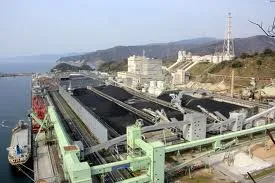
Hokuriku Electric Power Co shut the 700 megawatt coal-fired No.2 unit at its Tsuruga plant in northwestern Japan on Thursday for repair work and inspection.
Australia's wave energy system gets funding
The 250kW bioWAVE ocean wave energy system in Victoria, Australia has been awarded conditional funding support of $5 million.
India to implement open access system to power

India's Ministry of Law has approved the immediate implementation of the open access system in the power sector.
Vietnam seeks loans for power transmission projects
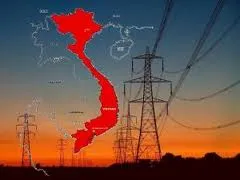
Vietnam is seeking loans from international finance organisations and domestic commercial banks to fund power transmission projects.
Focus moves to China's offshore wind opportunities as onshore profit margins shrink

Suffering from shrinking profit margins from onshore wind farm projects since the beginning of 2011, China's wind turbine manufacturers are now looking for growth opportunities in offshore projects.
A holistic security program is needed for energy and utility systems

In the US and even globally there is an increasing emphasis on improving the cyber security of the systems and components controlling such things as electric substations, control centers, gas pipelines, and the associated Supervisory Control and Data Acquisition (SCADA) systems. As an active observer of this industry for many years I can say that the cyber security of these systems is improving; however, there is a new gap or omission brewing. We are often asked to perform security assessments for energy and utility companies. As we do work at some customer sites we are continuing to note that the emphasis on cyber is certainly in place; however, the physical security of the infrastructure is being ignored. What we are concluding is a holistic security program is missing at some of these companies. What do I mean by holistic? Essentially holistic security is concerned with the whole security environment in an organization rather than simply focusing on single elements such as cyber, physical, administrative or technical security. In other words, security is viewed as a collection of interconnected and coordinated functions to protect assets and maintain reliability. Why is the holistic emphasis missing? The history of security for energy and utility enterprises has primarily been focused on “guns, gates and guards” until around 2008. Overall the security focus was really a military of police mindset. Cyber was very rarely considered. After 2008, in the United States and North America, the North American Electric Reliability Corporation (NERC) Critical Infrastructure Protection (CIP) standards were published and enforcement began with emphasis on protection of critical cyber assets that are important to the reliability of the bulk electric system. The enforcement included inspections and fines for non-compliance. A new emphasis on cyber security emerged; and as a result physical security was placed in a lower echelon. The observation we offer is based on our own experiences in the field. For instance, we see the singular focus on cyber at various global utilities we inspect. We have seen examples of where physical security is in decline and not being address at substations and generation facilities, including: External doors and locks are not adequately protected. There are gaps between the doors and door frames and the lock assemblies are not protected with simple metal plates. In several cases we’ve been able to open doors with simple plastic credit cards and gain access to critical cyber assets and copper. Door hinges are on the outside of the door frame. Because of this practice it would be easy to unscrew the hinges then simply lift the door out of the frame. Control building perimeters have unprotected windows in doors and walls. We’ve seen windows in doors that could simply be broken physically and then the door opened by reaching inside through the window break.
Asian wind turbine manufacturers jostle for export supremacy

Exports have been the driving force behind the spectacular economic growth rates seen across much of Asia over the past decade. So it comes as little surprise that exports have fuelled the rapid growth of the region’s clean energy sector as well.
Carbon capture, utilization and storage

Fossil fuels will remain the predominant source of global energy through for at least the next two decades and possibly beyond. However, their usage will continue to produce carbon dioxide (CO2). Many studies evaluating mitigation options argue that carbon capture is an essential technology that should be applied to any carbon-based fuel, including coal, natural gas, and biomass.
Enabling cleaner power generation in Asia through digital prototyping

As Asia grows, so too do its economic, social, resource and environmental challenges. At the same time, corporations are becoming more aware of the important role they have to play in addressing these challenges, and the opportunity this represents. Promoting clean technology is one way for business to lead by example. Under government, consumer and competitive pressures, companies need to adopt sustainable practices in their business operations and product development. By developing or investing in use of clean technology, companies can more easily achieve these goals.
Thought Leadership Centre



Most Read
1. Annica wins Sarawak solar‑hydrogen project in regional expansion 2. About $165b ASEAN renewable assets face climate risk, Zurich Insurance says 3. Middle East energy disruption spurs Asia coal demand surge, Rystad says 4. SEA green economy to hit $430b by 2030, but grid bottlenecks threaten growth 5. Japan’s US LNG resales equal output of 17 coal plants, report saysResource Center

 Read Here
 Advertise
 Sign Up
Event News

Be amongst the industry leaders recognised for driving innovation and operational rigour across Asia.










Commentary
Malaysia’s energy workforce is upskilling, but to what standard?
Asia’s grid decade: Why transmission will decide the pace of renewable growth
The supply-side blind spot in ASEAN’s data centre boom