APAC
ASEAN could save $2.3b by 2040 with smart grid investments
ASEAN could save $2.3b by 2040 with smart grid investments
Indonesia, Vietnam, and the Philippines face the highest investment needs.
Clean energy surges past fossil fuels in China, India
In China, solar output grew by 168 terrawatt-hours.
Global electricity demand up by 369 TWh in H1

China accounted for 54% of the increase.
Align water initiatives with market strategies for lasting impact – Roland Berger’s Chris Ong

He emphasises that integrating them into economic agendas makes solutions both sustainable and transformative.
Installed RE to more than double by 2030

This will be driven by solar energy expansion.
Digital tools underused in Asia-Pacific energy transition — ABB

Interest is accelerating, but adoption is limited.
World Bank fuels East Asia and Pacific RE through Multiphase Programmatic Approach

This initiative will specifically help decarbonise the power sector.
Over 90% of global electricity to be powered by renewables by 2050
However, gaps in infrastructure and grids continue to present challenges.
Wind and solar to meet majority of power demand to 2035
China remains to be a major player.
Transmission infrastructure investment to reach $573.7b by 2030

This growth is supporting the rise in smart grid demand.
Global hydrogen demand up 2% in 2024

The majority of this was met by hydrogen produced from fossil fuels.
Global hydro turbine market to hit $4.9b by 2035

Investments in RE transition and grid reliability are some of the factors fuelling the growth.
PV inverters market to reach $49.0b by 2035

The expansion is being fuelled by the push for decarbonisation and RE integration.
Utilities must evolve into agile, platform-first orchestrators – EY Consulting’s Gregory Poussardin

He stressed that innovation is the most indispensable element in accelerating the energy transition.
Leaders must future-proof organisations through embracing change and innovation – EY’s Sanjeev Gupta

He sees carbon capture, clean fuels, smart grids and sustainable practices as key to future energy resilience.
Smarter choices and risk management secure long-term value – The Lantau Group’s Mike Thomas

He stressed how market design, risk, and end-user demand are reshaping Asia’s power sector.
Global transmission and distribution infrastructure to reach $789.2b by 2035
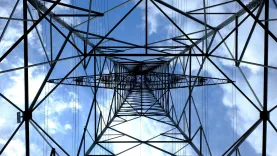
Thanks to rising power demand and grid modernisation, amongst others.
Thought Leadership Centre



Most Read
1. China, India drive Asia power demand growth amidst LNG price pressures 2. China's 1.3 TW wind capacity target to drive hybrid tower growth 3. Philippines energises 74.5MWp Tantangan solar project 4. Fossil fuels met all ASEAN power demand growth in 2023 5. India’s coal fleet delivers nearly 70% of electricity in Q2Resource Center

 Read Here
 Advertise
 Sign Up
Event News

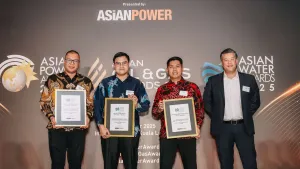
Be amongst the industry leaders recognised for driving innovation and operational rigour across Asia.













Commentary
Why bigger digesters alone won't solve Asia's renewable energy challenge
Scaling for resilience: What Asia Pacific’s bioenergy markets can learn from each other