Asia leads global renewable growth as project risks rise
Supply chain risks remain a major challenge for renewable energy projects.
Asia remained the world's largest renewable energy market in 2025, accounting for 74.2% of global renewable capacity additions, according to WTW's Renewable Energy Market Review 2026.
The region added 513.3 gigawatts (GW) of renewable energy, bringing total installed capacity to 2,891 GW, or 56.1% of global renewable capacity.
The expansion was driven by continued investment in solar, onshore and offshore wind, hydropower, battery energy storage systems (BESS), hybrid projects and floating solar.
As renewable projects scale up, developers and financiers are placing greater emphasis on risk management. "Insurance has shifted from a transactional requirement to a strategic enabler of bankability, lender confidence and capital mobilisation."
Supply chain disruption remains one of the biggest risks facing Asia's renewable energy sector in 2026.
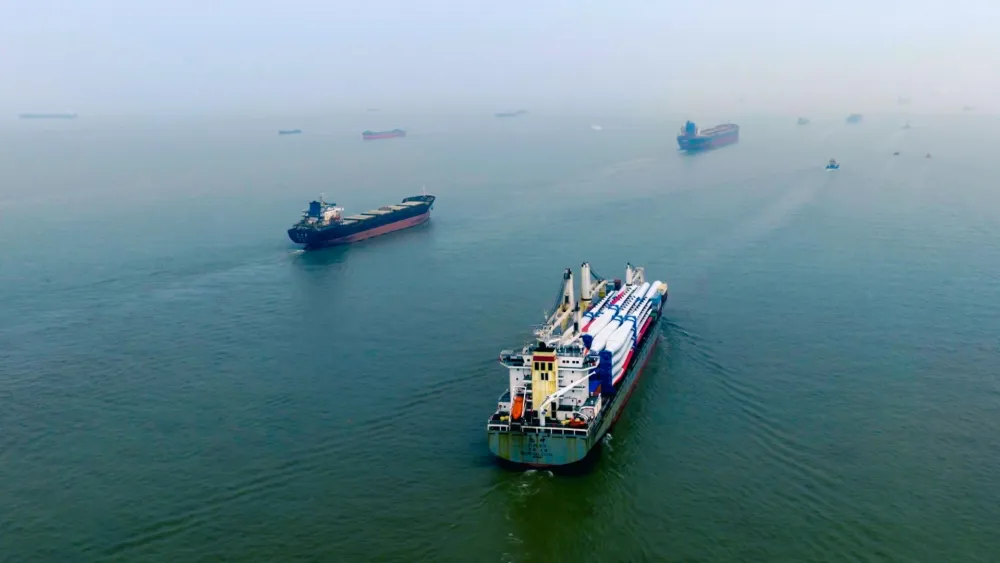
Geopolitical tensions, trade policies, logistics delays and supplier concentration continue to affect project schedules and costs. The industry remains heavily dependent on China for solar PV modules, inverters, wind turbine components and battery cells, exposing developers to export restrictions, tariffs and policy changes.
Whilst India and Southeast Asia are expanding manufacturing capacity, they have yet to match China's production scale and cost competitiveness.
Instead of product shortages, developers are facing delivery delays, longer lead times and higher costs, increasing pressure on project timelines and procurement.
China's removal of export-linked VAT rebates for solar PV products in April 2026, followed by the phased withdrawal of battery export rebates through 2027, has raised global prices for solar and battery components.
The policy changes have increased procurement costs, reduced project margins and heightened delivery risks across Asia-Pacific.
"From an insurance and financing perspective, these developments sharpen focus on delay in start up (DSU) exposure and adequacy of DSU indemnity periods," the report noted.
The Asian renewable energy insurance market remains competitive in 2026, supported by global insurers, regional markets and reinsurance capacity.
Capacity is strongest for utility-scale projects backed by experienced developers, proven technologies and strong risk management.
Domestic insurers continue to expand their participation, although international reinsurance remains essential for large and catastrophe-exposed projects.
Insurers continue to apply stricter technical underwriting, focusing on engineering quality, sponsor experience, technology maturity and natural catastrophe exposure.
The renewable energy insurance market is expected to remain supportive but selective in 2026.
Strong government policies, energy security initiatives and decarbonisation targets will continue to drive renewable energy investment across Asia.
However, climate risks, supply chain disruption, subsidy changes and emerging technologies are expected to keep underwriting standards high.
The report said that developers, sponsors and lenders should engage insurers early, provide transparent project information and align project design, contracts and risk transfer strategies to address supply chain disruption, DSU exposure, and natural catastrophe risks.














 Read Here
 Advertise
 Sign Up