China’s renewable surge risks extending coal use amidst grid bottlenecks
Coal remains a major source of electricity across the country.
China’s renewable energy boom risks prolonging coal use as grid bottlenecks and renewable-linked industrial projects limit the amount of coal that clean power can displace, according to a Global Energy Monitor (GEM) report.
China has more than 500 gigawatts (GW) of wind and utility-scale solar capacity under construction, more than the rest of the world combined. But grid bottlenecks and electricity market arrangements that limit system flexibility are driving renewable energy curtailment in resource-rich regions, whilst coal remains a major source of electricity transmitted across the country.
GEM said China has 664 GW of prospective utility-scale solar capacity and 698 GW of prospective wind capacity in announced, pre-construction, or construction phases.
The country could meet its 2030 target for wind and solar to account for more than 50% of installed power capacity by the end of 2026.
China’s wind development pipeline rose 37% from 2025 to 2026, whilst the rest of the world recorded a 1% decline.
“With 251GW of wind capacity already under construction—more than twice the rest of the world combined—it would generate enough annual electricity to match Germany’s entire 2025 output across all sources once fully operational,” the report said.
Much of this buildout is concentrated in northern and north-western regions that form the country's desert energy-base strategy, with six provinces and autonomous regions in these areas accounting for more than half of China’s prospective wind and utility-scale solar capacity.
Grid constraints and electricity market arrangements have pushed solar curtailment to between 10% and 17% in resource-rich provinces including Qinghai, Xinjiang, and Gansu.
Wind curtailment across northern and north-western corridors ranges from 4% to 9%, the report noted.
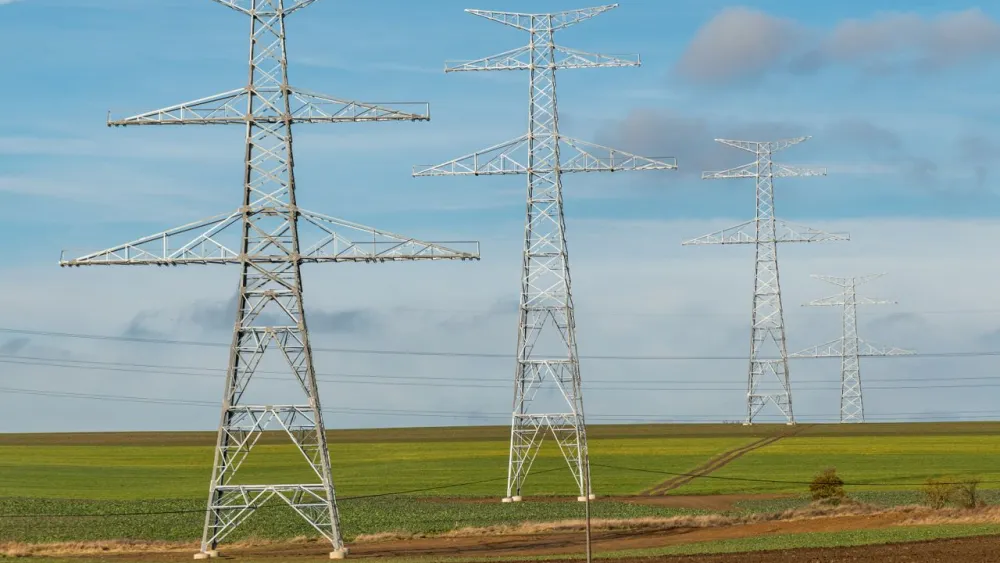
GEM said China would need 27 ultra-high-voltage direct-current (UHVDC) lines to transmit power from its wind and solar megabases, whilst the 15th Five-Year Plan aims to add 10.
“Across China’s UHVDC network, wind and solar power represent only around one-fifth of transmitted electricity, whilst coal accounts for 42%,” it said.
China is responding by pairing renewable generation with local industrial demand through energy storage, green-power direct connections, industrial parks, and green hydrogen.
GEM warned this approach could create a “coal lock-in” by allowing renewable projects to support high-emissions industrial developments without replacing a significant share of their coal use.
It cited Baofeng Energy’s 2025 olefins project in Inner Mongolia, which combines a 1,000 megawatt wind and solar project with green hydrogen production.
The project reduces coal consumption by 210,000 tonnes a year, but this represents 2.2% of the facility’s total annual coal intake.
Aiqun Yu, Research Analyst and Senior East Asia Strategist at GEM, said the success of China’s renewable energy megabases “will not be measured by the gigawatts added, but by the volume of coal they actively displace”.












 Read Here
 Advertise
 Sign Up