Asia-Pacific renewable surge tests grids amidst rising climate risks
The region is expected to exceed 60% of global RE generation by mid-century.
The Asia-Pacific (APAC) region is adding renewable energy capacity faster than any other market as it faces rising climate-related risks that are testing existing grid infrastructure, according to Ember’s latest report.
With the region adding three times more renewable capacity than Europe and five times more than North America over the past decade, the report projects that APAC will produce more than 60% of global renewable power by 2050.
It says around 90% of renewable capacity added in the region since 2014 has come from wind and solar generation, increasing reliance on variable power sources as electricity consumption rises.
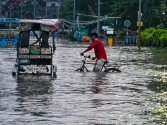
The report links the shift to renewable-heavy grids with growing exposure to climate disruption, citing recent extreme weather events as evidence that energy systems face operational risks beyond traditional planning assumptions.
It highlights China’s 2022 heatwave and drought, which cut hydropower generation in Sichuan to less than half of normal levels and led to industrial power rationing.
The report states that heatwaves create simultaneous pressure on electricity systems by increasing cooling demand whilst reducing infrastructure performance through overheating transformers, derated thermal plants, and transmission constraints.
Ember adds that even if global warming remains limited to 1.5°C, a one-in-50-year hot extreme could occur 8.6 times more often than historical levels.
The report outlines a three-stage framework for utility adaptation.
The first stage, described as “firefighting,” focuses on post-failure repairs and localised recovery efforts.
The second stage centres on reinforcing infrastructure through measures such as elevating substations and undergrounding power lines to reduce asset-level vulnerability.
The third stage, described as “systemic adaptation,” shifts towards whole-system planning based on climate projections and cross-sector dependencies involving energy, water, transport, and communications networks.
The report states that artificial intelligence (AI) can support this transition through three functions: data fusion, analytical coordination, and operational decision support.
Machine learning and spatio-temporal models can combine fragmented datasets from weather, transport, and energy systems into a single operational view, the Ember report said.
The report adds that multi-agent systems can coordinate climate, power, and water models to improve scenario planning and system forecasting.
It also states that AI systems can help operators evaluate large numbers of operational scenarios and assess trade-offs between resilience, cost, and efficiency.
The report cites several existing projects as examples of deployment.
It points to an AI orchestration platform in Shanghai that integrates forecasting, trading, and regulation functions to support real-time grid balancing and virtual power plant operations.
It also references the Finnish-German FUSE project, which combines distribution network and weather data to monitor grid conditions, and the DARPA-backed MINT platform, which links climate, water, and economic models.
The report calls on governments to introduce mandatory climate stress testing in grid planning, establish data-sharing standards across institutions, and launch AI pilot programmes focused on infrastructure resilience.















 Read Here
 Advertise
 Sign Up